
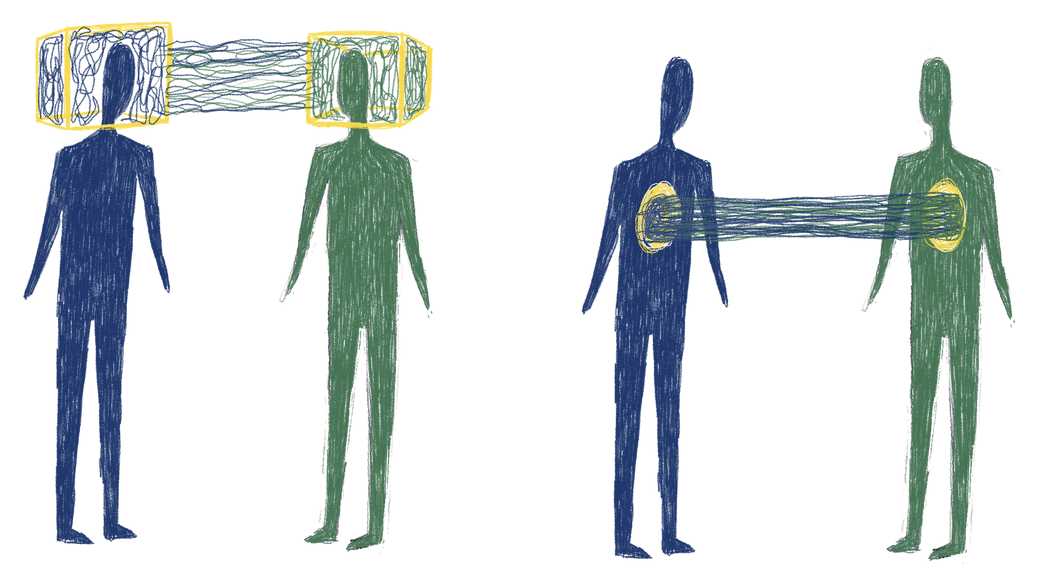
(Courtesy: https://intentionalpeersupport.org)
“What I love about the heart is that it’s capable of breaking in infinite ways; may we never live long enough to experience all of them, but may we live long enough to experience the ways the heart can repair itself for subsequent breakings. The cycle of rupture and repair is a requirement of living, a cost of surviving, something that goes hand in hand with another reality of survival: that, throughout your life, you may not only lose people but also gain them.” – Hanif Abdurraqib (2)
When I am with friends from medical school, time evaporates. The decades gone by dissolve into nothing and suddenly, we are happy and nineteen. Wonder why. Nostalgia? A special bond? Or our shared joys and ordeals of those intense years, the wrath of those exams, the horrible mess food and the whims of our teachers. We are united by these things. We are not separate.
Where does our suffering come from?
From feeling separate.
A sudden tragic loss of a child can rip us asunder from the humdrum world and the people in it. We jump orbits and float away from everyone on an unknown trajectory.
So many of my ‘friends’ disappeared.
I saw them on Day 1 and 2 and then nothing, not even a text or a call.
Luckily, the early days were a fog, a maze. Luckily, I have forgotten so much.
Some people, who were simply work colleagues showed up big time. They could tolerate being present to my despair. They sent little books of ‘poems for difficult times’ in the post. We met for coffee in town. We chatted on the phone. They made a note of Saagar’s birthday and death anniversary and sent me cards, saying, thinking of you today. Simple small things that meant the world.
Some people spoke very little but their body language boomed loud and clear. They mirrored the contraction in me. On the second day, Rajeev, an old friend sat with us for two hours in silence. Before leaving, he said, “If there is anything I can do, please let me know.” Over the next months, he followed my blog, commented on posts and casually dropped by every other week. He let me know he was there.
Some possibly saw in me the worst possible lashings of fate as a parent. Maybe they got frightened. The speed of their exit may have indicated their fear of catching this contagious misfortune.
Of course, people don’t understand. They can’t. It’s not their fault. I wouldn’t expect them to. If this had happened to a friend of mine, I would like to think that I would’ve been there for them in the perfect way, but I doubt it. The woman I was in the ‘Before’ might have been too busy or too afraid or too awkward. I don’t know.
Yes. My address book has radically changed. And so, have I.
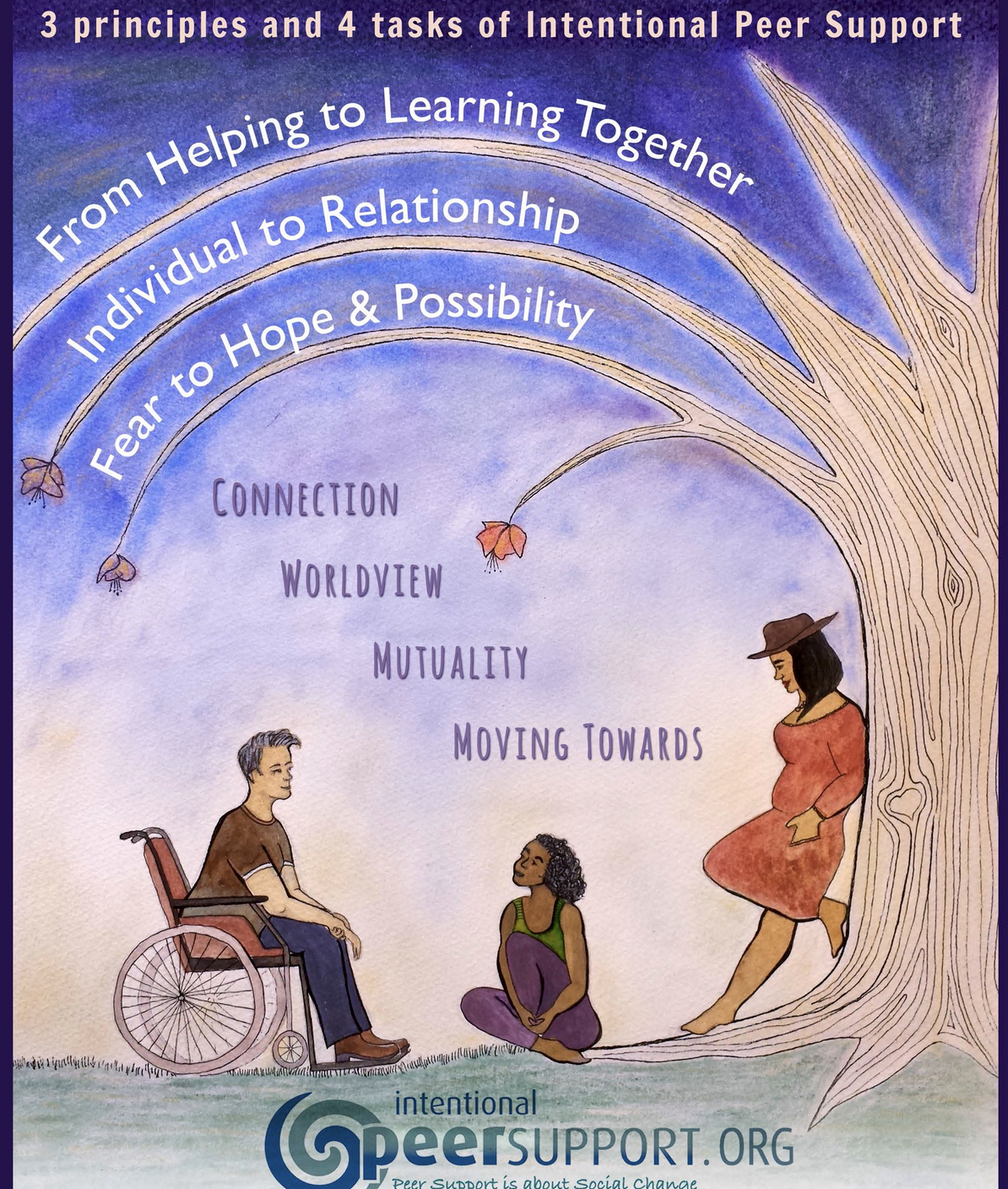
Throughout our lives we lose people and, gain some who we might never have come by had we not lost. Parents who have lost children already know each other through knowing themselves, their experience. We are not separate. We understand each other’s worldview. We are open and vulnerable to each, fully trusting that we will be held. We learn and grow together. Facing the reality of survival holding hands, we move towards hope and possibility.
References:
- International peer Support. A personal retrospective by Sherry Mead:
- An article in the New Yorker by Hanif Abdurraqib
https://www.newyorker.com/culture/essay/in-defense-of-despair